The manufacturing industry is facing increasing uncertainty in material costs and supply chains. Changes in tungsten supply, fluctuations in metal prices and evolving trade policies are bringing new challenges to precision manufacturing.
For manufacturers involved in precision stamping, tooling quality is becoming more than a technical requirement. It is a key factor in maintaining production efficiency, product consistency and long-term cost control.
Material Market Changes and Their Impact on Tooling
Tungsten carbide is widely used in precision tooling due to its hardness, wear resistance and ability to withstand demanding production conditions. Since 2025, changes in tungsten export policies and global supply conditions have contributed to significant price increases in international markets.
Copper prices and other industrial material costs have also experienced fluctuations, while tool steel prices vary depending on material grades, supply conditions and regional markets.
These changes highlight an important consideration for manufacturers: raw material costs are only one part of the overall manufacturing cost. Tooling design, machining accuracy, material selection, mold life and maintenance requirements can also have a significant impact on the total cost of production.
Why Precision Mold Design Matters
In precision stamping, a well-designed mold is not simply about producing parts that meet dimensional requirements. It is about achieving stable, repeatable and efficient production over time.
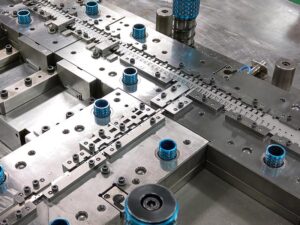
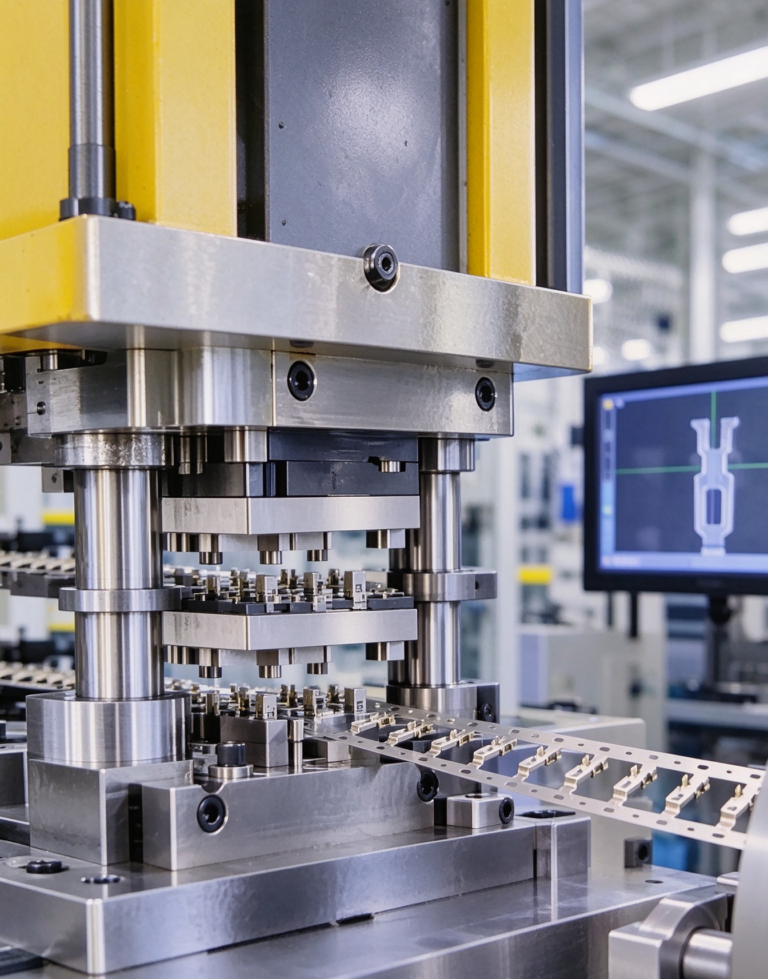
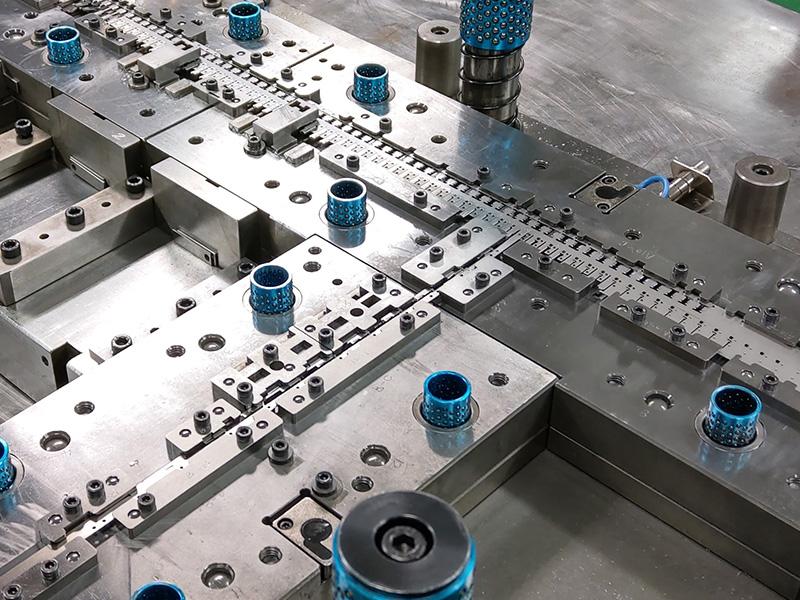
Precision stamping dies require careful consideration of:
- Material properties and material selection
- Punch and die clearance
- Tool structure and mechanical stability
- Wear resistance and tooling life
- Manufacturing accuracy and dimensional consistency
- Maintenance accessibility and repair considerations
Proper mold design and material selection can help reduce unnecessary tool wear, minimize production interruptions, improve product consistency and support more efficient manufacturing.
For high-volume production, even small improvements in tooling performance can make a meaningful difference throughout the life of a mold.
Tooling Cost Is More Than the Initial Price
Choosing a mold based solely on its initial purchase price may not always be the most economical decision.
A mold that requires frequent maintenance, produces inconsistent parts or experiences premature wear can increase manufacturing costs over time.
Precision tooling engineering considers the entire production cycle — from mold design and material selection to machining, assembly, trial runs and long-term production performance.
The objective is not simply to manufacture a mold, but to develop a tooling solution that supports reliable production, consistent quality and practical maintenance.
Precision Tooling for Long-Term Manufacturing Performance
As material markets and global supply chains continue to evolve, manufacturers need tooling solutions that are not only precise but also reliable and designed for long-term performance.
At RUIJUN ELECTRONICS, precision mold design and manufacturing are an important part of our manufacturing capabilities. We focus on precision stamping dies and molds, supporting the development of tooling solutions and precision stamping parts for different industrial applications.
We believe that investing in precision tooling is an investment in production stability, quality consistency and manufacturing efficiency.
RUIJUN ELECTRONICS CO., LTD.
Precision Stamping Dies & Molds | Precision Stamping Parts | Injection-Molded Parts
Website: https://ruijun-elec.com